Home › Services
Fence repair in Columbus, Ohio: posts, gates, rails and storm damage
Most fences do not fail all at once. They fail in one narrow band just above and below the soil, at two or three posts, or at the one gate used ten times a day, while the rest of the run is still good material. A repair that lasts starts with a diagnosis: what moved, what moved it, and whether the same thing is about to happen three posts down. Here is how each kind of fence gives out in central Ohio.
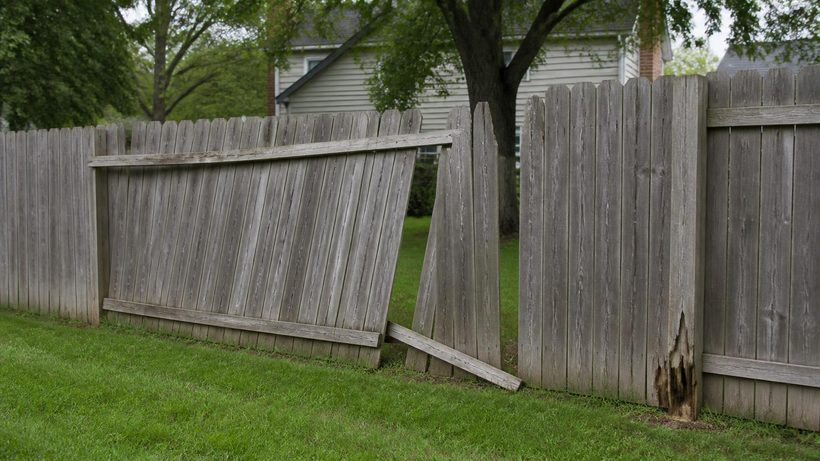
Rot at the ground line, and why that band is where wood dies
Dig out a failed wood post and the pattern repeats: solid timber at the bottom, solid timber a foot up, and a soft chewed-out waist right where the post met the dirt. Decay fungi need moisture, oxygen and wood at once. Deep in saturated glacial till there is water but almost no air, and above grade the post dries between rains. Only that band at the soil offers both, all season.
A yard makes it worse. Mulch banked on a post holds water, and a concrete collar troweled flat cups water against the wood instead of shedding it. Testing takes a minute: push at chest height and watch the base, then drive an awl into the wood at grade. Sound wood fights back; punky wood swallows the blade under a stained skin that looks perfect. How wood is built to slow this down is on the wood privacy fence page.
Post heave: what one winter of freezing and thawing does
Heave is a different failure from rot. Water held in clay expands as it freezes, and frozen soil grips a post hard enough to carry it upward. In the thaw the ground settles, but loose soil and water slump into the space underneath, so the post never comes all the way home. A few cycles and it walks up out of the ground.
Depth decides it. A footing that never reached below the level where the ground freezes has frozen soil on every side and nothing anchored below. Departments around here generally want holes on the order of three feet, and the one reviewing your address states the depth it will accept, and a hole dug wider at the top gives frost a shoulder to lift against. The tells: picket bottoms no longer parallel to the lawn, a gate that has to be lifted, a concrete plug standing proud of the turf.
Reading a lean before you touch it
A lean is information. Which way it goes and how many posts share it tells you what failed, and straightening one without fixing the cause buys a year.
- One post leaning while its neighbors stand plumb: that post is the problem, usually rot at grade or a shallow footing.
- A long stretch leaning the same way with no rot: wind load found the weakest shared detail, usually post depth or size.
- A corner or end post pulling inward on chain link: fabric tension is winning, because its brace loosened or was never there.
- A run leaning toward a swale: water is moving soil, so the fix needs a drainage answer as well as a footing.
- A post shoved sideways beside a ridge of heaved turf: a root is growing into the footing, so the post moves, not the tree.
Sagging and dragging gates: post, hinge or frame?
A dragging gate gets replaced far more often than it needs to be. Three separate parts produce the same symptom, and five minutes sorts them out.
- Read the gap on the latch side with the gate shut. Wide at the top, tight at the bottom means the leaf is dropping; evenly wide means a post moved.
- Put a level on the hinge post both ways, then push it. Out of plumb, or any give at the base, and nothing done to the gate itself will hold.
- Measure the leaf corner to corner, both diagonals. Numbers that differ mean the frame racked out of square.
- Lift the latch edge and watch the hinges. Movement at the screws, or a pin worn to a taper, means the hardware quit.
- Find the scrape marks. Wear at the outer bottom corner points at sag; wear across the whole bottom points at heave.
What actually fixes a gate
If the hinge post moved, it gets reset or replaced and the gate goes back afterward. A gate post carries a cantilevered load every time somebody shoves the leaf, so it earns a deeper, wider footing than a line post; reusing the old hole is how a repair repeats.
If the frame racked, the cure is a diagonal carrying tension from the top hinge corner to the bottom latch corner, which a cable and turnbuckle does cheaply. A wood brace works in compression and must run the other way, the detail most often installed backward. If hardware quit, through-bolted hinges spread the load into the whole post. A wheel under a sagging leaf is a last resort.
Broken rails and pickets, tired fasteners, and what a storm leaves
Rails fail at the fastener, where a nail split the wood and the split opened with every wet and dry cycle, and along the upper face of a flat-laid rail, which holds water like a shelf. Pickets crack at knots, cup away from the rail, or split where a nail sits close to an end.
Fasteners are their own failure mode and nobody inspects them. Treated lumber and cedar are hard on plain steel, so the wrong nail corrodes, streaks the board black and loses grip long before the wood is spent. A nail that comes out pitted and thin means refastening, not just new boards.
A solid privacy fence is a sail, and wind load goes to whatever detail was weakest. Walk the whole run, not just the part lying down: push every post, look for bright wood at rail ends, nails backed out, footings with a fresh crack. A post that snapped at grade was already rotted there, which makes its neighbors candidates. Photograph it before moving anything, and if the fence was a pool barrier, that barrier is open until something temporary closes it.
Chain link: stretched fabric, lost tension, bent framework
Chain link rarely fails as a whole. It loses tension, and the rest follows: diamonds distort, the bottom bells outward where a dog pushes, and slack fabric saws against the top rail.
Look at the ends first, since tension is carried by terminal and corner posts: a corner pulling in, or a bar slipped out of its bands, drops tension across a span. Then look low, because a broken bottom tension wire is the usual reason a fence that held a dog last year does not now. Re-stretching with a pull bar and come-along, snugging the bands and running a new bottom wire restores more fence than people expect. A kinked top rail is spliced with a sleeve; torn fabric is woven in or replaced a span at a time. Mesh and coating differences are on the chain link fence page.
Vinyl and aluminum: cracked sections and the matching problem
Vinyl fails by impact rather than wear, and cold makes it worse: a panel that flexes in July cracks from a mower kickback in January. The usual breaks are a cracked bottom rail, a picket punched loose, and a split at the routed pocket where a rail enters a post. Parts sit captive, so freeing one rail often means loosening a post.
Matching is what people do not see coming. Tooling gets revised and profiles discontinued, so a rail from a decade-old fence may have no current equal, and color drifts as sun dulls the original. Put the new part where it shows least. Durable versus brittle vinyl is on the vinyl fence page, and ornamental sections that bolt to brackets, the easiest of the four to swap, are on the aluminum fence page.
Sistering, resetting or full replacement, chosen post by post
A bad post has three answers, and the right one depends on where the wood is still sound and what job that post does. Older fences often need all three.
- Sistering. A driven steel spike or length of galvanized post goes in beside the old footing, through-bolted to the sound upper portion. Good for a break confined to the ground line. Not for a gate, corner or end post.
- Resetting. The post is sound but the footing heaved or sat too shallow. It comes out with its concrete, the hole is deepened, a gravel bed goes in so water leaves, and the post is reset plumb. This is the answer to heave.
- Full replacement. Rotted through at grade, snapped, splintered around its fasteners, or carrying real load. The labor is breaking out the old footing, which is what surprises people about a one-post price.
- Whole sections. Once three or four neighboring posts check out bad, rebuilding that span as a unit beats three separate visits.
Temporary stabilization that will not make the real repair worse
Sometimes a fence has to stand for two weeks before it can be fixed properly, because a dog needs containing or a thaw has to finish. Keep the bracing reversible.
- Brace to the ground, not a neighbor's fence: two stakes and a 2x4 into firm soil, screwed to a rail, not through visible pickets.
- Lift a gate off its hinges rather than letting it hang on a failing post, because every swing pries that post further over.
- Hold a broken top rail from below with a temporary post, not on the pickets.
- Tie slack chain link back to the framework with galvanized wire, since plastic ties go brittle through a winter.
- Do not pour fresh concrete around a rotted post: it traps water on the wood and doubles the eventual removal.
- Do not drive a repair spike into an existing footing, which deflects it out of plumb, and do not hammer a heaved post back down.
Repair or replace: what really drives the decision
Four things decide it, and none is how rough the fence looks. How many posts are bad as a share of the total, since posts are where the labor lives and ten bad out of thirty is a rebuild paid for in installments. Age against what the material had in it, because a fence near the end of its life hands you the next failure a season later. Whether the style and parts are still made, which settles vinyl and older ornamental systems. And whether you would keep this layout at all.
Footing quality sits under all four. If the original holes were shallow, narrow or bell-shaped, the fence keeps failing at a new post every year and post-by-post repair never gets ahead of it. That pattern, more than rot, turns a repair conversation into a replacement one, and starting over is on the fence installation page.
Footage, post count, gate work, equipment access and how much old concrete has to come out move a repair number far more than the material does, and none of it prices from a description. Send the address and a few photos through the contact page, including close shots at the ground line of the worst posts. The areas we cover pages break the region down by community.
Fence repair in Columbus — common questions
Why is my fence leaning after the winter?
Two causes, needing different repairs. If the post is soft at the ground line, decay took the wood that resisted the load, and that post gets sistered or replaced. If the wood is sound but the footing sits higher than it did, frost lifted it and loose soil filled the gap underneath, so it never settled back. Probe at grade with an awl first, because that test separates the two.
Can you replace one fence post without taking the whole fence down?
Usually. The rails and pickets on either side are freed, the run is braced upright, the old post and its concrete come out, a new post is set plumb, and everything is refastened. The work is in the footing, since breaking out old concrete takes longer than setting the post. Where rot is limited to ground level, a driven steel sister skips the digging, though not on a gate post.
What makes a fence repair cost more or less?
Not the boards. The drivers are how many posts are involved, whether they are line posts or gate and corner posts, how much old concrete gets dug out and hauled, whether a machine can reach the work or it goes by hand through a narrow side yard, and how much fence comes apart to reach the bad part.
Is it worth repairing a twenty-year-old wood fence?
Sometimes, and the posts decide. Probe a dozen of them across the run at grade. One or two soft ones means fix those, refinish, and expect several more good years. A third or more means a rebuild paid for a piece at a time, with a new failure every spring. Check depth as well as rot, because shallow original holes keep producing the same problem at fresh posts.
My gate drags on the ground. Do I need a new gate?
Rarely. Measure the leaf corner to corner both ways. Matching diagonals mean the frame is still square, so the fault is the hinge post or the hinges, and the post gets plumbed or reset while the hinges get through-bolted rather than screwed. Diagonals that differ mean the leaf racked, and a cable and turnbuckle from the top hinge corner to the bottom latch corner brings it back.
My chain link is loose and my dog gets under it. Can it be tightened?
Almost always, and it is one of the better-value repairs. Slack usually traces to a broken bottom tension wire, a tension bar slipped out of its bands, or a corner post pulled inward because its brace gave up. The fabric gets re-stretched with a pull bar and a come-along, the bands are snugged back onto the terminal posts, and a new bottom tension wire is run along the line.
Talk through your site
Start with the address, what you want done, and a few photographs of the area, including anywhere water sits after a heavy rain.
Related work
Fence Installation
New residential fences, laid out, set and finished for central Ohio frost and glacial till.
Wood Privacy Fences
Board-on-board, shadowbox and stockade privacy fences, and what makes wood last here.
Vinyl Fences
Low-maintenance vinyl privacy and picket fences and how they behave in an Ohio winter.
Chain Link Fences
Galvanized and black-coated chain link for yards, dogs and back property lines.
Aluminum & Ornamental Fences
Ornamental aluminum for front yards, graded lots and pool enclosures.
Across the metro
Upper Arlington
Established streets, mature trees and tight side yards where access decides the method.
Worthington
An older village core plus newer subdivisions, with big trees and creek-side grade changes.
New Albany
Planned neighborhoods where architectural review has a say before anything is ordered.
Pickerington
Newer Fairfield County subdivisions, flat lots, dogs and covenants on height and style.