Home › Services
Privacy fence Columbus Ohio: what makes a wood fence last here
Wood is still the cheapest honest route to a yard nobody can see into, and the material that rewards good decisions most. Two fences on the same street, built to the same height in the same year, can be a decade apart in useful life, and nearly all of that gap is settled before anyone digs: species, treatment rating, how the boards are arranged, post size and spacing, which metal goes through the wood, and whether the fence ever gets refinished. Here is how those choices play out in central Ohio, and what to look for in the lumber half of a proposal.
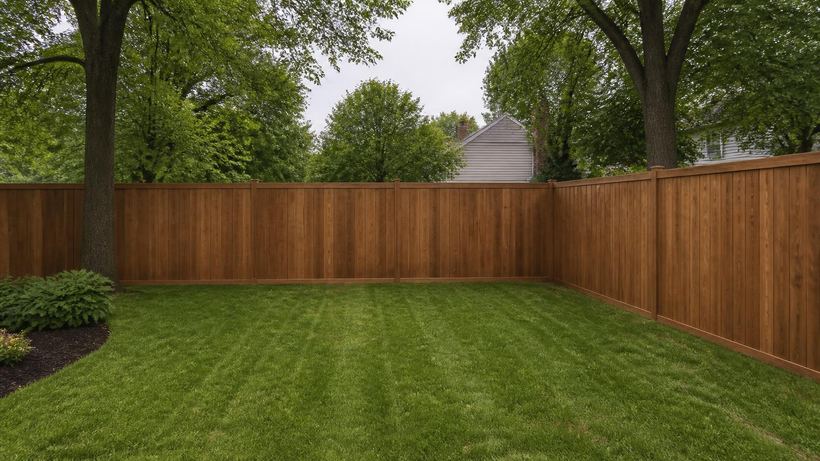
Treated pine and western red cedar do different jobs
Almost every wood fence here is built from one of two things. Pressure-treated southern yellow pine is dense, stiff and cheap, with no natural rot resistance at all -- it gets that from copper-based chemistry forced in under pressure. Its weakness is water: treated pine usually leaves the plant wet, and as it gives that moisture up it shrinks across the grain, cups toward the bark side and sometimes twists.
Western red cedar works the other way around. Its heartwood carries extractives that fungi and insects avoid, so the resistance is built in rather than injected. Cedar is light, dries calmly, stays flatter over a decade, and weathers to a silver-gray plenty of people want on purpose. It costs more, dents easily, and the pale sapwood on cheaper cedar has none of the heartwood's resistance. A long back-line run is often pine; a fence you see from the patio every evening is often cedar.
Read the end tag: ground contact is not the same as above ground
Treated lumber is sold in use categories, and the tag stapled to the end of each board states which one it is. Above-ground stock carries a lighter chemical retention and expects wood that dries quickly after it gets wet. Ground-contact stock carries a heavier retention and expects wood buried in soil or stuck somewhere damp that cannot dry -- which describes the bottom of a post hole in glacial till exactly. The two look identical on the rack, so the tag is the only thing separating them.
- Posts, and any framing near grade, should be ground-contact rated -- get that in writing.
- A proposal saying only that the lumber is treated has not told you which rating the posts are.
- Every field cut removes treated surface, so cut ends want a brush-on end-cut preservative.
- Rows of small slits in a post are incising, which is how deep penetration is achieved, not damage.
- Cedar has no tag and no retention number, because nothing was injected into it.
The privacy styles, and what each one costs you
Privacy is not one setting. How the boards meet the rails decides what you see through, how much air passes, how much load reaches the posts, and how each side reads.
- Stockade: boards butted edge to edge on one face. Full privacy on day one, no airflow, full wind load, and the style most likely to show daylight once the wood shrinks. Cheapest per foot.
- Board-on-board: boards set with deliberate gaps, then a second layer covering those gaps from the same side. Privacy survives shrinkage because the overlap has room to move, and both sides look nearly the same. More lumber, still a solid wind barrier.
- Shadowbox: boards alternate front and back of the rails, overlapping at the edges. Private straight on, open at an angle. Wind passes through it, which takes real load off the posts -- the friendliest style on an exposed corner lot.
- Horizontal: boards run parallel to the ground. Clean, current, and the least forgiving build here, because the boards sag between posts unless spans stay short and the lumber is genuinely straight.
- Cap and trim: any of the above finished with a top cap and trim over the board ends. It hides a ragged top line, sheds water off end grain, and stiffens the assembly.
Why a solid six-foot fence is the hardest thing you can ask of a post
A solid privacy fence is a sail. Wind cannot pass through it, so every gust loads the full face of a section and hands that force to two posts as a lever trying to rotate them out of the ground. Taller fence, longer lever, and the load concentrates right at grade -- the wettest and most biologically active part of the post. That is why solid wood fences lean and open picket fences generally do not.
The clay-rich glacial till across much of Franklin County holds water instead of draining it, so a post hole behaves like a bucket. Water sitting against a post keeps it damp and, frozen, expands and tries to lift it. Depth below the frost line answers heave, which lands near three feet across most of central Ohio. Confirm the required depth with the building department rather than working from a rule of thumb. How the hole gets prepared belongs to the fence installation page.
What the lumber package controls is post size and spacing. Four-by-four posts are the residential default, adequate on a well-built six-foot run. Four-by-six or six-by-six, or tighter spacing, buys stiffness where load is worst: corners, ends, gates, and any stretch with open ground upwind. Six-foot sections cost more than eight-foot and flex less.
Hybrid builds: treated or steel posts carrying cedar boards
Wood fences fail at the posts first, while the boards above are fine. That is the argument for building out of two materials on purpose. The common hybrid is ground-contact treated posts and rails with cedar boards on the face: the part in the dirt is the species built for dirt, the part you look at is the one that stays flat.
The other hybrid hangs wood rails and boards off galvanized steel posts, exposed or sleeved in a wood box. Steel does not rot or warp and shrugs off the load that makes a tall solid fence lean, so it earns a look on an exposed run or a horizontal build where sag is the enemy. The costs are visible brackets and an industrial look next to wood. A steel post still has to reach below the frost line.
Fasteners, and the two ways metal and wood fight each other
Fasteners are a rounding error on the cost and a top reason a fence looks bad early. The copper in modern preservatives attacks plain steel in a way older chemistry did not, so a bright screw in wet ground-contact pine can start losing metal within a couple of years. What you get is sound boards hanging on failed connections, rust-streaked at every hole. Use fasteners rated for treated wood -- hot-dip galvanized, purpose-made coated screws, or stainless -- and the same for brackets, hinges and latches.
Cedar creates a different problem. The extractives that make its heartwood rot-resistant are tannins, and tannins react with iron. Drive a thinly plated fastener through cedar and the first rains pull a black or blue-gray streak down the face from every head. Stainless stops it outright, hot-dip galvanized handles most situations. Ring-shank nails hold better than smooth, and screws back out easily when one board needs swapping.
Staining and sealing: the cycle that actually adds years
Exposed wood is attacked from two directions. Ultraviolet light breaks down lignin at the surface, which turns new wood gray and raises loose fibers. Water does the real damage: each wetting and drying cycle swells and shrinks the surface, and that movement opens the fine checks that let water sit deeper and longer. Semi-transparent penetrating stain is the usual fence answer, because pigment blocks ultraviolet light, the oils slow water uptake, and it wears off instead of peeling the way film-forming paint does.
- Wait until sprinkled water soaks in rather than beads -- weeks to months on new treated pine, far sooner on cedar.
- Clean it with a wood cleaner and a soft brush, bottom to top so it does not streak.
- Rinse and let it dry a couple of days, because finish over trapped moisture will not hold.
- Apply on a mild, overcast day, since hot sun flashes the stain off before it soaks in.
- Cover top edges, end grain and the bottom few inches, which drink more than the faces.
- Re-coat south and west runs a year or two ahead of the shaded ones.
How a wood fence fails, and how to slow each step
Wood fences fail in a predictable order, and nearly every step has something you can do about it. The fixes themselves live on the fence repair page.
- Rot at the ground line comes first, because wood there stays damp with oxygen available. Ground-contact posts, drainage that moves water away, and keeping mulch off the wood buy years.
- Post heave follows, from freezing and thawing in water-holding clay; depth below the frost line is the main defense.
- Leaning is wind load finding posts too small, too far apart or too shallow. Bigger posts at corners and gates, or an open style that lets air through, address it.
- Cupping, twisting and checking is drying stress -- straighter, drier lumber and a finish that slows the wet-dry cycle are the answer.
- Gates go wrong fastest, because a gate is a section with a hinge and a lever arm. Oversized gate posts and a real diagonal brace are the difference.
- Bottom boards rot early wherever they touch soil. A gap there, or a treated kickboard sacrificed on purpose, keeps the expensive boards out of the dirt.
What to look for in the lumber package on a quote
Two bids for a six-foot privacy fence can describe products years apart in life, and the difference hides in details neither bid volunteers. Ask for these in writing and make every bidder answer the same questions. Footage, height, gate count, grade and access move the total far more than pine versus cedar does, and the contractor prices the job after walking it.
- The species, and for cedar whether boards are heartwood-selected or run-of-the-mill with sapwood mixed in.
- Actual board and rail dimensions, and rails per section -- two rails and three behave very differently at six feet.
- Post size, post spacing, and the larger size used at gates, corners and ends.
- The style by name, and which side the finished face lands on, since an association may have decided already.
- Whether kickboard, top cap and trim are included, and whether staining is in scope at all.
- How grade changes get handled, and what workmanship coverage the contractor stands behind.
Where wood fits against the other fence materials
Wood wins on cost per foot of real privacy, on matching a street's existing look, and on being repairable one board at a time. It loses on maintenance, because the refinishing cycle never ends. If that cycle is the part you cannot live with, the vinyl fence page covers the low-maintenance route; for a back property line and a dog, look at chain link; for a front yard or a pool enclosure where the view matters, ornamental aluminum is usually the answer.
Lot character moves the recommendation more than people expect, and the community pages under the areas we cover get into that. Send the address, rough footage and photos of the line from both ends, and start on the contact page.
Privacy fence Columbus Ohio — common questions
How long does a wood privacy fence last in central Ohio?
Fifteen to twenty-five years is realistic, and the spread inside that range is enormous. Posts decide it. Ground-contact posts set below the frost line, water led away instead of pooling, and a finish renewed on a cycle reach the top of it. Above-ground posts in a wet clay hole, plain steel fasteners and a fence nobody cleans can be leaning inside a decade. Boards almost always outlast posts.
Is western red cedar worth the extra cost over pressure-treated pine?
It depends on what would bother you. Cedar stays flatter, cups and twists less, ages to a color many people like, and needs no chemistry to resist decay, which earns its price on a fence you see daily from the patio. Pine is stronger, stiffer, holds fasteners harder and costs less per foot, which matters on a long rear run. Many of the best builds split it: treated posts, cedar boards.
What is the difference between board-on-board and shadowbox fencing?
Both overlap boards, but in different directions. Board-on-board layers a second run over the gaps from the same face, so the screen stays solid after the wood shrinks and reads nearly identical from both sides. Shadowbox alternates boards front and back of the rails, so it is private straight on and opens up at an angle. The practical difference is airflow: shadowbox lets wind through and loads the posts less.
Why does my new treated fence already have gaps between the boards?
Because treated pine usually leaves the plant wet and shrinks across the grain as it dries. Boards tight the day they went up can pull back a quarter inch or more through a first summer, which is why butted stockade fences show daylight in season two. Nothing has failed. If solid privacy has to survive that shrinkage, the fix is an overlapping style chosen at the start.
When can I stain a brand new pressure-treated fence?
Once the wood is dry enough to accept it, usually a few weeks to a few months depending on how wet it arrived and what the weather has done since. The test is simple: sprinkle water on a board, and soaking straight in means ready while beading means wait. Stain on saturated wood goes on blotchy and sheds within a season. Cedar is generally ready much sooner.
Should the smooth side of the fence face my neighbor or my yard?
Convention here points the finished face outward, toward the street or the neighbor, with rails and posts on your side. Some associations and some zoning codes make that mandatory rather than customary, so confirm before anything is ordered. If facing the framing yourself is unappealing, the overlapping styles solve it: board-on-board and shadowbox look essentially the same from both sides.
Talk through your site
Start with the address, what you want done, and a few photographs of the area, including anywhere water sits after a heavy rain.
Related work
Fence Installation
New residential fences, laid out, set and finished for central Ohio frost and glacial till.
Fence Repair
Leaning posts, dragging gates, wind damage and rotted boards, and when a repair stops making sense.
Vinyl Fences
Low-maintenance vinyl privacy and picket fences and how they behave in an Ohio winter.
Chain Link Fences
Galvanized and black-coated chain link for yards, dogs and back property lines.
Aluminum & Ornamental Fences
Ornamental aluminum for front yards, graded lots and pool enclosures.
Across the metro
Upper Arlington
Established streets, mature trees and tight side yards where access decides the method.
Worthington
An older village core plus newer subdivisions, with big trees and creek-side grade changes.
New Albany
Planned neighborhoods where architectural review has a say before anything is ordered.
Pickerington
Newer Fairfield County subdivisions, flat lots, dogs and covenants on height and style.